December 3, 2013
Deadline: January 3, 2014. There’s only about 30 days left to submit your input on the proposed NFPA 350 Best Practices Guide for Safe Confined Space Entry and Work. If you are involved in any kind of confined space work or rescue (municipal or industrial), now is the time to offer your comments. While it...
Read More
November 7, 2013
Suggested Operating Guidelines (SOG) – written directives that establish a standard course of action on how a department intends to operate. Most departments have SOGs for different rescue scenarios, but often overlook the importance of establishing procedures for safe training. A look at the stats reveals that while 10% of firefighter deaths occur in the line...
Read More
August 31, 2013
NOTICE: If you are involved in any kind of confined space work or rescue, you need to read this document and offer your comments. This applies to anyone who may work in or near confined spaces, both industrial and municipal. At a meeting earlier this month, NFPA’s Guide for Safe Confined Space Entry and Work (Draft) was approved...
Read More
April 24, 2012
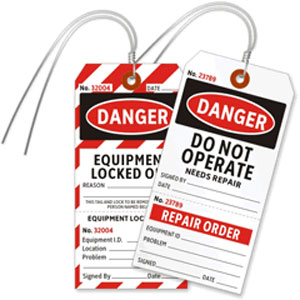
“The concept of LOTO is a great one and it works. As rescuers, we have to take the common industrial application and expand it to ensure that the rescue scene is safe and that we are controlling hazards at the point of contact with the victim or in a space where something has gone very...
Read More
October 10, 2011
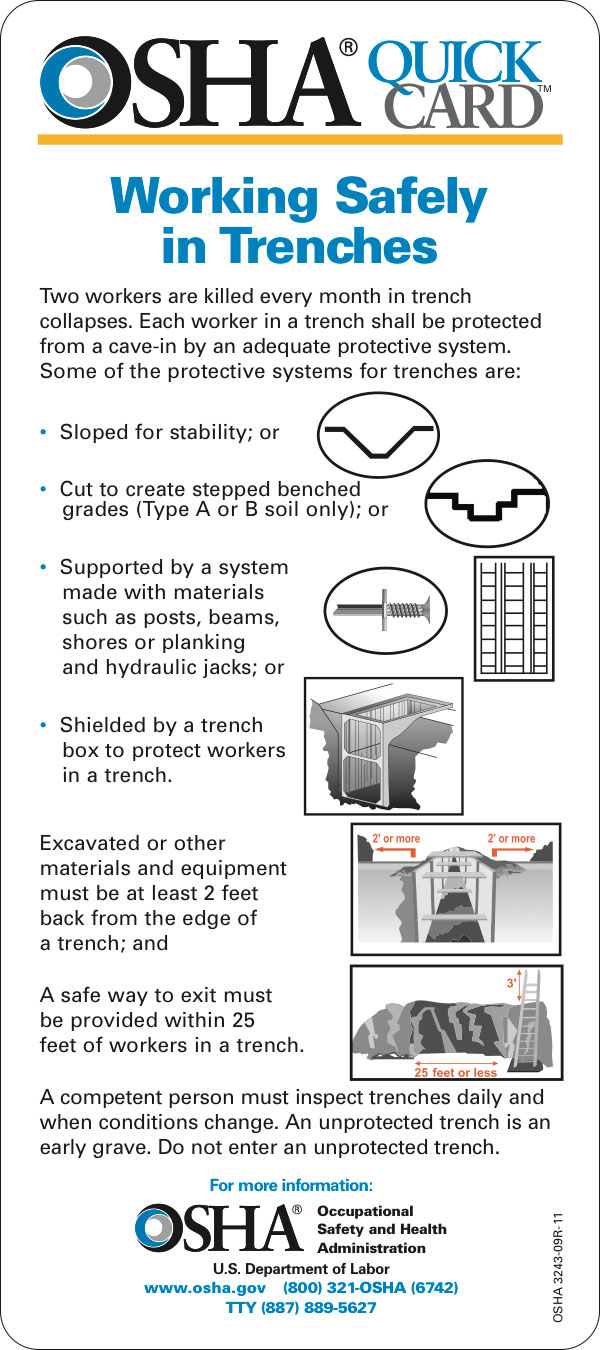
Two workers are killed every month in trench collapses. Unprotected trenches are among the deadliest hazards in the construction industry and the loss of life is devastating.Since 2003, more than 200 workers have died in trench cave-ins and hundreds more have been seriously injured. OSHA has three new guidance products to educate employers and workers...
Read More
September 13, 2011
Often the question comes up about using a local fire department for confined space rescue coverage in an industrial facility; and if it would be in compliance with OSHA 1910.146? In addition to the proper evaluation of the prospective rescue service, we always stress the need for “reciprocal communications” between the rescue service and the...
Read More
July 20, 2011
Because it is important to keep our readers and students updated, we wanted to share the following information with you. Please note that this issue is not resolved as of this time, and we have a letter submitted to OSHA for clarification. However, we wanted to keep you in the loop so that you can...
Read More
July 6, 2011
Question: If I close and Lockout/Tagout the main valve on the natural gas line supplying a boiler unit – does this satisfy OSHA’s requirement for eliminating the hazard of a permit required confined space? Answer: No, it does not. You are asking a question that we address quite often and it reveals some misconceptions regarding...
Read More
November 18, 2010
To our knowledge, there is no regulatory requirement. However, we’ve heard this before and have used it as well when stressing the importance of proper PPE for rescuers, particularly when IDLH atmospheres may be involved. Here’s our thinking… if the entrant’s PPE did not provide adequate protection and he or she is now requiring rescue...
Read More
September 24, 2010
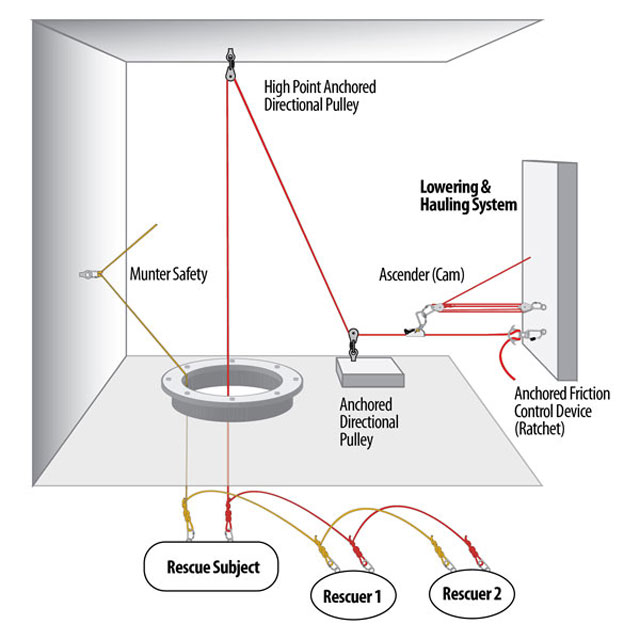
This question was submitted by Thomas Vitti from the Chevron Fire Dept. in Salt Lake City, Utah. In the event of an actual rescue is a safety line necessary? Good question… the answer is YES and NO. This question falls into somewhat of a gray area. Much depends on what type of rescue you’re doing;...
Read More